Views: 0 Author: Site Editor Publish Time: 2026-11-04 Origin: Site
Prematurely swapping out crushing components drives up operational expenses. Delaying maintenance risks catastrophic rotor failure and unplanned downtime. Plant managers and maintenance engineers constantly struggle to pinpoint the exact operational threshold where turning a hammer yields diminishing returns compared to a full replacement. You need a reliable technical evaluation framework to make this call accurately.
We base this evaluation framework on wear metallurgy, rotor dynamics, precision measurement, and production metrics. This guide standardizes the turn-versus-replace decision for reversible crusher hammers. You will learn how to read wear patterns, track motor loads, and safely execute maintenance protocols. By understanding the mechanical limits of your crushing components, you can maximize material utilization without compromising the structural integrity of your rotor assembly.
Wear Thresholds Dictate Action: Turning should occur at 40-50% radial wear; pushing beyond this risks uneven weight distribution and severe rotor vibration.
Metallurgy Matters: High-performance alloys like ZGMn18Cr2 hammer heads alter the wear curve, extending the time between required turns and full replacements.
Downtime vs. Yield: The decision to replace must factor in the labor cost of a maintenance shutdown against the lost throughput from operating with blunted hammer profiles.
Systemic Impact: Delayed crusher hammer replacement accelerates wear on secondary components, including liner plates, breaker blocks, and rotor shafts.
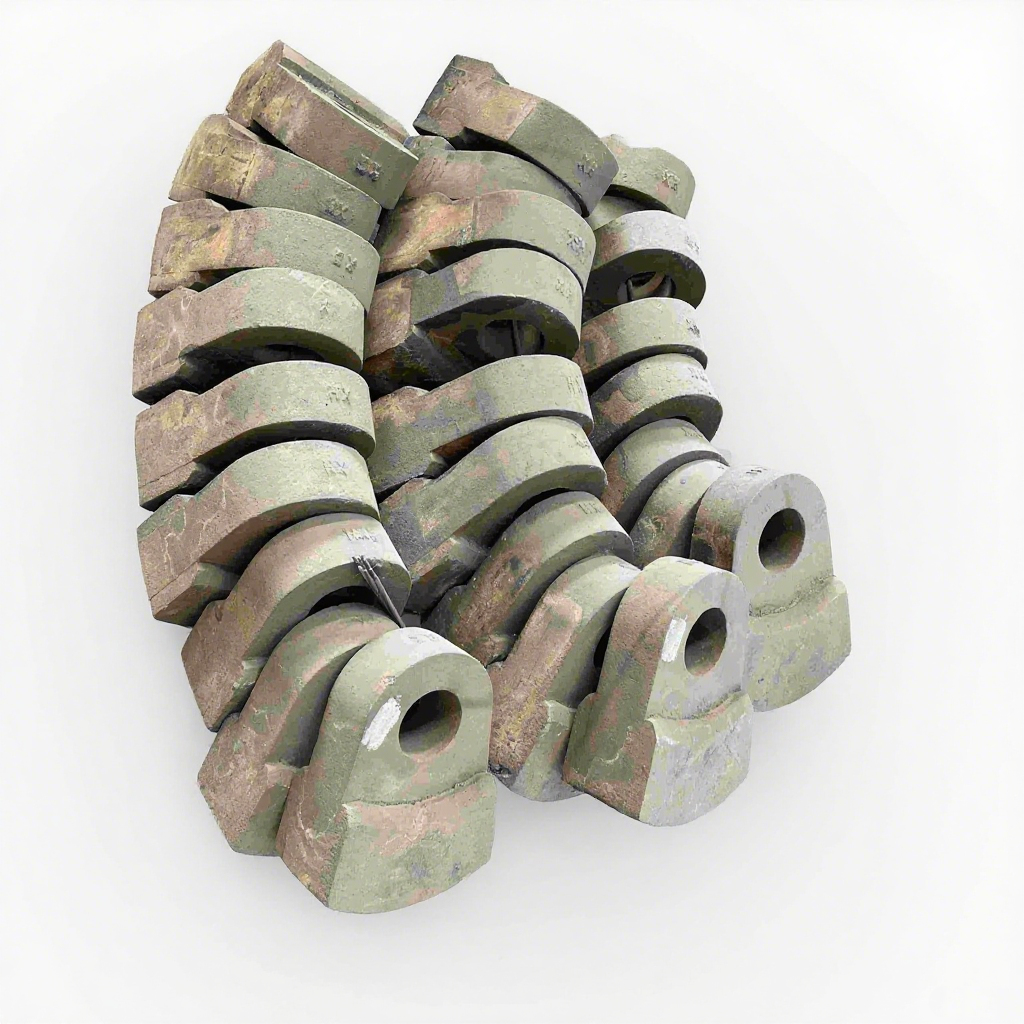
Impact crushers rely on massive kinetic energy transfer. The rotor spins at high velocities, driving the hammers into the incoming feed material. Symmetrical hammer designs provide a distinct mechanical advantage in this environment. They feature two identical strike faces. This geometry allows operators to maximize material utilization before scrapping the part entirely. You get two lifecycles out of a single casting.
Modern crushers often feature reversible rotors. You simply reverse the motor direction to utilize the fresh strike face on the opposite side of the hammer. Older or simpler designs require maintenance crews to physically remove the suspension pins and flip the hammers manually. Both methods serve the same purpose. They expose a sharp, uncompromised leading edge to the rock, restoring crushing efficiency without requiring immediate new parts. The physics remain identical: a sharp edge shatters rock efficiently, while a blunt edge relies on inefficient friction and brute force.
Understanding how your components degrade is mandatory for maintenance planning. Standard wear manifests predictably. Abrasive wear slowly polishes and rounds the leading edge as rock slides against the metal. Impact wear causes minor surface spalling as the hammer shatters the feed material. These are expected outcomes of the crushing process and indicate that the metallurgy is performing correctly under load.
Abnormal wear dictates immediate replacement over turning. You must train maintenance crews to spot these fatal flaws during routine inspections. Localized gouging indicates the presence of oversized, uncrushable material in the chamber. Cracking around the suspension pin hole compromises the structural integrity of the entire casting. Mushrooming occurs when the alloy is too soft for the application, causing the metal to deform and spread rather than wear away cleanly. If you see mushrooming, the hammer will eventually jam against the rotor discs.
Wear Type | Visual Indicator | Root Cause | Required Action |
|---|---|---|---|
Standard Abrasive | Smooth, rounded leading edge | Normal friction from rock sliding | Turn at 40-50% wear |
Standard Impact | Minor surface dimpling/spalling | Normal kinetic shattering of feed | Monitor and turn when blunted |
Severe Gouging | Deep, irregular grooves | Tramp metal or oversized hard rock | Replace immediately |
Pin Hole Elongation | Oval-shaped suspension holes | Excessive vibration or delayed turning | Replace immediately |
Mushrooming | Flared, deformed strike face | Alloy too soft for impact velocity | Replace and upgrade metallurgy |
No two quarries operate under identical conditions. Variations in feed material drastically alter the expected wear lifecycle of your components. High silica content acts like heavy-grit sandpaper, accelerating abrasive wear exponentially. If you transition from crushing standard limestone to a high-silica river gravel, your wear rates will spike immediately. Elevated moisture levels cause fine materials to stick to the breaker plates. This forces the hammers to drag through a dense, muddy bed rather than striking rock in mid-air, which generates massive friction and heat.
Tramp metal ingress remains the most destructive variable on any site. Excavator teeth, loader bucket lips, and stray rebar occasionally bypass magnetic separators. When these uncrushable objects enter the chamber, they deliver catastrophic shock loads. These strikes specifically compromise the structural integrity of reversible hammer crusher parts. A severe tramp metal impact often causes micro-fractures deep within the casting, forcing premature replacement regardless of the remaining wear life on the strike face. You cannot safely turn a hammer that has absorbed a direct hit from a loader tooth.
You should not rely solely on visual inspections to schedule maintenance. Production metrics provide objective, real-time data on hammer condition. A sudden drop in throughput capacity often signals a severe loss of hammer profile. When the leading edge rounds off, the hammer fails to grip and shatter the rock effectively. It merely bats the material around the chamber, wasting energy and reducing the tons-per-hour output of the plant.
Changes in Particle Size Distribution (PSD) serve as a primary trigger for maintenance evaluation. Monitor your discharge belts closely. An increase in oversized discharge indicates that the hammers are no longer fracturing the rock to the target specification. This generates higher recirculating loads. The closed-circuit system becomes bottlenecked with oversized material, dragging down the overall efficiency of the entire plant. When the return belt is running full, your hammers are likely dead.
Blunted components require significantly higher kinetic energy to fracture rock. A sharp hammer cleaves through the feed material efficiently. A rounded, worn hammer relies on brute force and friction. This mechanical inefficiency translates directly into electrical strain. The motor has to pull more current to maintain the rotor speed against the increased resistance of the rock bed.
You will see measurable spikes in amp draw on the crusher motor. As the hammers lose their profile, the motor must work harder to maintain the required rotor RPM under load. Tracking these amp spikes through your SCADA system provides a clear, quantitative indicator that the hammers require turning or replacement. Operating continuously under high motor strain accelerates wear on drive belts, sheaves, and electrical contactors. It also drives up your monthly utility bills.
Remove guesswork from the evaluation process. Visual estimates lead to inconsistent maintenance schedules. Introduce standardized measurement protocols to track material loss accurately. Maintenance teams should utilize custom steel wear templates. These templates match the original profile of the hammer. Placing the template over the worn part instantly reveals the exact percentage of radial wear. This takes the subjective opinion out of the inspection process.
Ultrasonic thickness gauges provide another layer of precision. Use them to measure the remaining metal thickness around the critical pin eye area. We highly recommend establishing a baseline 3D profile or wear map during the initial installation of a new set. Tracking material loss against this baseline over time allows you to predict exactly when the next maintenance intervention will be required. You can schedule the crane and the crew weeks in advance, rather than reacting to an emergency.
Establish a strict baseline rule for your maintenance crew. You must turn the hammers when the primary crushing edge reaches 40-50% of its maximum allowable wear limit. Do not wait until the face is completely destroyed. The geometry of the strike face dictates crushing efficiency. Maintaining a functional, aggressive angle prevents material sliding and excessive friction. If you let the face wear completely flat, the crusher stops breaking rock and starts grinding it.
If you push the first face beyond 50% wear, you risk compromising the structural integrity of the entire casting. Deep wear on one side alters the center of gravity. When you eventually flip an over-worn hammer, it may hang at an incorrect angle on the suspension pin. This poor alignment drastically reduces the effectiveness of the second strike face and can cause the hammer to strike the rotor discs during operation.
Turning hammers is not a simple swap. It requires meticulous attention to rotor dynamics. You must weigh every single hammer during the turning process. The rotor spins at high speeds, and any weight imbalance generates severe centrifugal forces. A few ounces of difference at the perimeter of a spinning rotor translates into thousands of pounds of eccentric force.
Follow strict guidelines for matching opposing hammer weights. You must balance hammers on opposite sides of the rotor within tight gram or ounce tolerances. Typically, opposing pairs should not differ by more than 50 to 100 grams, depending on the rotor size. Failing to balance the rotor causes eccentric loading. This violent vibration will quickly destroy the main spherical roller bearings, crack the bearing housings, and can even fracture the main crusher frame.
The physical process of turning hammers carries inherent risks. If you delay the turning process too long, you face the risk of pin seizure. Fine dust and moisture pack tightly around the suspension pins. Impact forces can also slightly deform the pins. When this happens, extracting the pins becomes a grueling, time-consuming task that often requires thermal lancing or heavy hydraulic presses.
Safety is paramount. Outline strict Lockout/Tagout (LOTO) protocols before opening the crusher housing. The rotor must be physically blocked to prevent accidental rotation while technicians are inside the chamber. Rigging safety is equally critical. These castings are incredibly heavy, often weighing hundreds of pounds each. Use certified slings, shackles, and overhead cranes to maneuver them safely.
During the turning process, implement strict lubrication and inspection protocols. Clean the suspension pins thoroughly with wire brushes and solvent. Inspect the protective sleeves and rotor discs for signs of grooving or fatigue. Lubricate the pins with appropriate high-temperature anti-seize compounds before reinstalling the flipped hammers. This ensures they will swing freely and makes the eventual replacement process much easier.
Every casting has an absolute minimum weight and dimensional tolerance. Once both strike faces are worn down to these limits, the part becomes a severe safety hazard. You must define these limits clearly in your maintenance manual. Operating below the minimum weight threshold increases the risk of catastrophic hammer fracture. The metal becomes too thin to absorb the kinetic shock of striking the rock.
When a hammer shatters inside a running crusher, the results are devastating. The broken shrapnel ricochets around the chamber at high velocity. This causes massive secondary damage to the crusher housing, breaker plates, and the rotor assembly itself. Replacing hammer crusher wear parts on schedule prevents these dangerous and costly failures. You never want to hear the sound of a broken hammer tearing through the inside of a crusher.
Trying to squeeze a few extra days out of dead hammers is a false economy. The cascading financial impact far outweighs the cost of new parts. Blunted hammers cause increased power consumption. They also accelerate secondary wear on breaker plates and liner blocks because the rock is dragged against the housing rather than shattered cleanly in the center of the chamber.
Furthermore, worn hammers produce out-of-spec product. This material requires recirculation, consuming plant capacity without generating sellable yield. Contrast the predictable, controlled cost of a scheduled crusher hammer replacement against the exponential cost of unplanned failure. Emergency downtime, ruined bearings, and destroyed rotor shafts will cripple your monthly production targets and destroy your maintenance budget.
Installing a new set of hammers requires rigorous commissioning. You cannot simply drop them in and start crushing. Static and dynamic rotor balancing is an absolute necessity immediately following a full replacement. Even minor casting variances between new hammers can cause harmonic imbalances. You must weigh and map the placement of every new hammer before installation.
Execute a strict commissioning sequence. Start with a visual inspection to ensure all pins, locking mechanisms, and cotter pins are secure. Conduct a no-load test run. Spin the rotor up to operating speed without feeding any material. Perform vibration analysis using handheld sensors or integrated SCADA monitoring. Ensure the new set operates well within acceptable harmonic tolerances before introducing rock into the chamber. If you detect abnormal vibration during the no-load test, shut it down immediately and recheck your weight distribution.
Metallurgy dictates performance. Standard carbon steel cannot survive the brutal environment of an impact crusher. You need advanced alloys engineered for high-impact applications. We must analyze the metallurgical properties of ZGMn18Cr2. This is a high manganese steel alloyed with a specific percentage of chromium, designed specifically for severe crushing duties.
The brilliance of ZGMn18Cr2 hammer heads lies in their work-hardening mechanism. The core of the casting remains austenitic and highly ductile. It acts like a shock absorber, preventing the hammer from snapping under heavy impact. Meanwhile, the surface layer transforms into ultra-hard martensite as it takes repeated beatings from the rock. The addition of chromium provides baseline abrasive resistance before the work-hardening fully takes effect. This dual-nature metallurgy extends the time between required turns and maximizes the overall lifespan of the part.
Depending on your specific geology, you might evaluate bimetallic or composite alternatives. These designs move away from traditional monometallic castings. Bimetallic hammers feature extremely hard inserts—often high-chrome iron or ceramic composites—cast directly into the strike faces of a tougher, mild steel shank. This provides a massive increase in localized hardness right where the rock impact occurs.
You must evaluate the trade-offs carefully. Bimetallic hammers offer superior wear resistance in highly abrasive environments. However, they are more brittle than pure manganese steel. They are highly suitable for abrasive feed materials like high-silica clinker, quartz, or river rock. They are less suitable for applications with heavy tramp metal or massive feed sizes, where the brittle inserts might shatter upon impact. For standard limestone crushing with occasional tramp metal, manganese remains the reliable standard.
Material Type | Primary Advantage | Primary Weakness | Best Application |
|---|---|---|---|
Standard Manganese (Mn14) | High impact resistance | Poor initial abrasion resistance | Soft limestone, large feed size |
Alloyed Manganese (ZGMn18Cr2) | Excellent work-hardening & toughness | Requires heavy impact to harden | Hard limestone, mixed aggregates |
High-Chrome White Iron | Extreme abrasion resistance | Highly brittle, prone to shattering | Fine crushing, highly abrasive feed |
Bimetallic / Ceramic Matrix | Combines toughness with hard strike face | Complex manufacturing, higher upfront cost | Silica-rich rock, clinker, slag |
Off-the-shelf parts rarely provide optimal performance for specialized applications. You need components tailored to your specific operational environment. Outline strict criteria when partnering with foundries for custom wear-resistant castings. The foundry must understand your feed material, rotor speed, and throughput targets to pour the correct alloy.
Demand transparency regarding their manufacturing processes. Precise heat treatment is mandatory. Manganese steel requires exact water quenching to achieve the correct austenitic structure. If the cooling rate is off, the metal becomes brittle. Insist on non-destructive testing (NDT), such as ultrasonic or magnetic particle inspection, to guarantee the castings are free of internal voids, micro-shrinkage, or casting flaws.
Finally, discuss inventory management strategies with your foundry partner. Custom castings require significant lead times for pattern making, pouring, and heat treatment. Factor these lead times into your planning to ensure strategic spares are physically on hand long before your current set reaches critical wear limits. You cannot afford to wait six weeks for parts when your crusher is down.
Every hour the crusher is locked out is an hour of lost revenue. You must compare the labor hours and rigging requirements needed to turn a set of hammers versus installing a completely new set. Turning hammers is labor-intensive. Extracting pins, weighing parts, cleaning the rotor, and repositioning the hammers takes nearly as much time as a full replacement. You are paying for the crane and the crew either way.
Develop strategies for aligning hammer maintenance with broader plant schedules. Do not shut down the plant solely to flip hammers if you can avoid it. Align the turning or replacement process with scheduled liner changeouts, screen deck maintenance, or conveyor splicing. Consolidating these tasks minimizes isolated downtime and maximizes your production gains. If you have to open the crusher to change the breaker plates, that is the exact time you should be evaluating and turning your hammers.
Take the following steps to optimize your crushing operation immediately:
Conduct a baseline wear audit on your current rotor assembly using custom steel templates to establish exact wear percentages.
Track motor amp draw daily through your SCADA system to identify performance drop-offs before visual wear becomes severe.
Implement a strict 50-gram weight tolerance policy for balancing opposing hammers during any maintenance intervention to protect your rotor bearings.
Consult with a specialized foundry to analyze your discarded parts and optimize the metallurgy for your next batch of castings.
A: You should turn the hammers when the primary strike edge reaches 40-50% radial wear. Additional indicators include a noticeable increase in motor amp draw, a drop in overall throughput, and a shift toward coarser product discharge on the main belt.
A: Delaying replacement causes severe rotor imbalance and eccentric loading. This destroys spherical roller bearings. Furthermore, over-worn hammers risk catastrophic fracture mid-operation, sending heavy shrapnel through the chamber and destroying breaker plates, liner blocks, and the crusher housing.
A: This specific alloy offers a perfect balance. The high manganese content provides a ductile, shock-absorbing core that work-hardens under heavy impact. The 2% chromium addition provides immediate baseline wear resistance against abrasive rock before the work-hardening process fully develops.
A: Standard reversible hammers feature two primary strike faces. This means they are turned exactly once. After the second face reaches its maximum wear limit, the entire casting must be replaced to maintain rotor balance and prevent structural failure.
A: Custom castings match the specific alloy and heat treatment to your exact rock geology and rotor speed. This tailored approach reduces radial wear rates, prevents mushrooming, and maintains an aggressive crushing profile for a significantly longer operational period.
A: Industry standards require opposing hammers to be matched within very tight tolerances, typically between 50 to 100 grams depending on the total mass of the rotor. Exceeding this difference causes severe harmonic vibration and rapid bearing fatigue.
A: Severe tramp metal impacts often cause deep structural micro-fractures or elongate the suspension pin holes. When this occurs, the hammer must be replaced immediately. Turning a compromised hammer risks catastrophic in-use failure, regardless of how much material remains on the strike face.