Views: 0 Author: Site Editor Publish Time: 2026-09-29 Origin: Site
Failing grinding media directly causes unplanned mill downtime and severe downstream equipment damage. You face a compounding financial impact when these failures occur in your comminution circuit. Unpredictable cracking and spalling disrupt grinding efficiency. They skew particle size distribution and inflate operating expenses. You must address this operational reality immediately rather than simply swapping out damaged steel. Resolving these failures requires moving beyond basic symptom management. You need a rigorous evaluation of metallurgical integrity. You must also analyze mill operating parameters and strategic material selection. Understanding the root causes of grinding ball breakage allows you to optimize your grinding circuit. This approach restores efficiency, stabilizes throughput, and protects your pumps and hydrocyclones from tramp metal damage.
Failure Distinction: Spalling (surface flaking) and cracking (catastrophic splitting) stem from different root causes, requiring distinct diagnostic approaches.
Metallurgical Match: Selecting the correct alloy—balancing hardness for wear resistance and toughness for impact—is the primary defense against premature failure.
Operational Alignment: Even premium grinding balls will fail if mill kinematics (e.g., critical speed, charge volume, pulp density, and ball size distribution) are poorly calibrated.
Expert Intervention: Utilizing specialized grinding media technical service is critical for conducting drop-ball tests, charge audits, Discrete Element Method (DEM) modeling, and optimizing the media string.
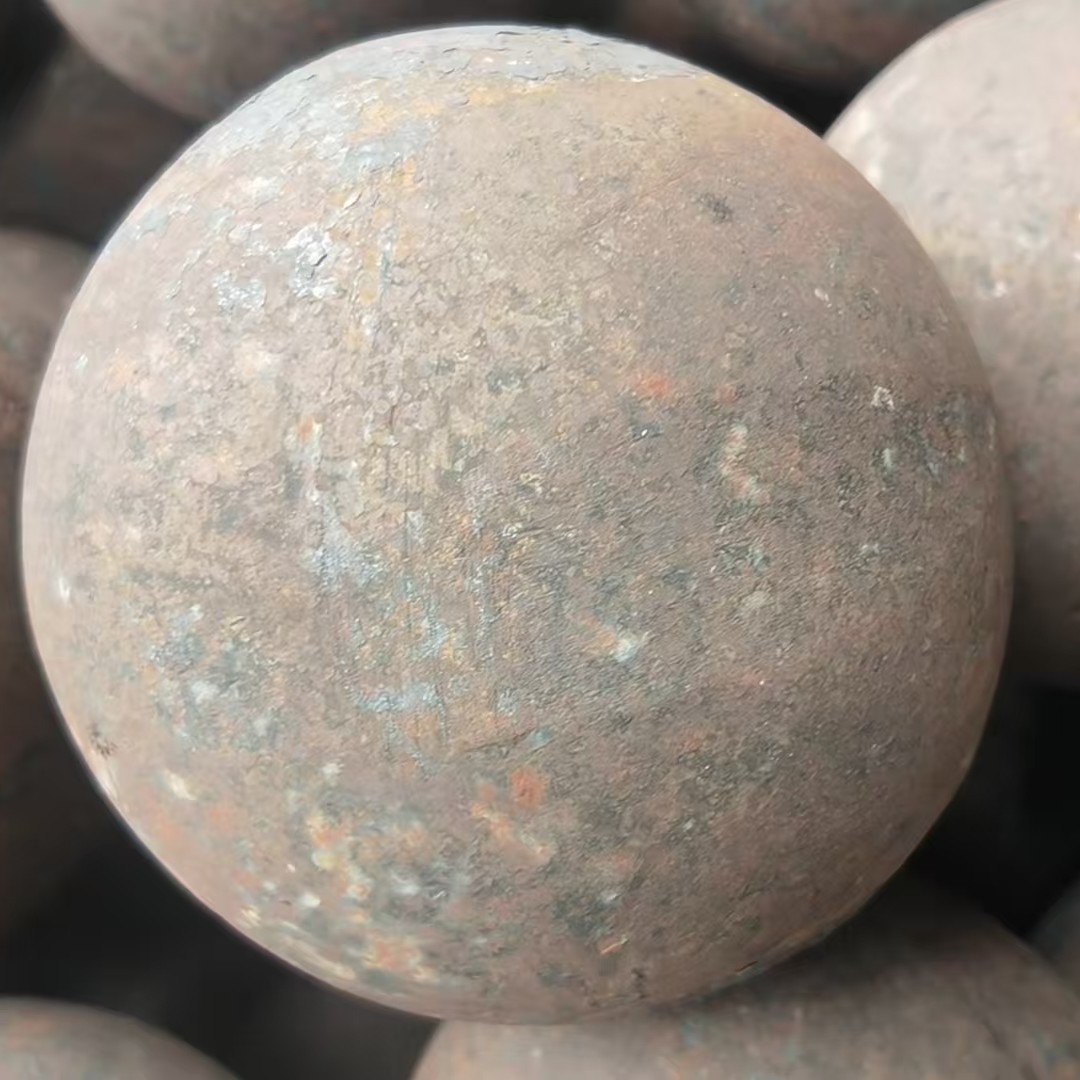
Spalling manifests as localized flaking on the ball surface. You will notice pitting, peeling, or scaling of the outer steel layer. This degradation creates irregular shapes known in the field as scats. The metallurgical mechanism behind spalling involves subsurface micro-cracking. Repetitive, low-energy impacts cause these micro-cracks to form just below the hardened surface over time. High stress concentration accelerates this fatigue process, especially when the media strikes other media rather than the ore. Stress corrosion in acidic slurries also contributes heavily to surface degradation, weakening the grain boundaries of the steel.
The operational impact of spalling is severe and immediate. Scats reduce grinding efficiency significantly because they lack the mass and spherical shape required to impart kinetic energy into the ore. They increase wear rates on mill liners by gouging the rubber or steel surfaces. Irregular shapes disrupt the charge kinematics inside the mill, altering the trajectory of the entire media string. You lose grinding power when round media turns into jagged fragments. Furthermore, these flat scats frequently blind the discharge grates, restricting slurry flow and causing the mill to pool, which further dampens grinding efficiency.
Cracking presents a much more immediate and destructive threat to your comminution circuit. You will see deep fissures, large chunking, or the complete bisection of the media. Finding half-balls in your trommel screen indicates catastrophic failure. The mechanism involves exceeding the fracture toughness of the material. High-energy impacts trigger this violent release of energy, splitting the steel instantly. Improper heat treatment often leaves excessive retained austenite in the microstructure. Under impact, this austenite transforms into untempered martensite, causing a volumetric expansion that rips the ball apart from the inside.
Internal casting voids also act as starting points for these deep cracks. A small shrinkage cavity in the core concentrates stress until the surrounding metal yields. The operational impact hits your production hard. You experience rapid media depletion, forcing you to increase your charging rates to maintain power draw. The mill loses significant grinding power as the total mass of the charge drops. Broken chunks create a high risk of tramp metal escaping the mill. This jagged metal damages downstream slurry pumps, tears polyurethane cyclone liners, and destroys flotation cell mechanisms.
Improper quenching and tempering during heat treatment create severe structural risks. These manufacturing errors leave excessive residual stress built up within the core of the steel. If the tempering cycle is too short or the temperature too low, the steel remains brittle. This internal stress releases violently under high impact in the mill. Casting defects also compromise structural integrity in non-forged media. Shrinkage cavities, gas porosity, and non-metallic inclusions act as internal stress concentrators. When heavy impacts occur, cracks propagate outward from these microscopic flaws until the ball splits.
Volumetric hardness consistency is another critical metallurgical factor. You need uniform hardness from the surface down to the core. Inconsistent hardness profiles cause uneven wear rates. If the outer shell is extremely hard but the core is excessively soft, the ball will deform or peel as it wears down. Conversely, if the core is too brittle, the ball will shatter once the compressive surface layer wears away. Poor alloy chemistry, specifically incorrect carbon-to-manganese ratios, further exacerbates these structural weaknesses, leaving the media vulnerable to the harsh kinetic environment of the mill.
Operating at excessive critical speeds damages your media string rapidly. High rotational speeds cause the charge to centrifuge, lifting the media too high. The media then bypasses the toe of the charge and strikes the mill shell liners directly. This severe steel-on-steel impact destroys both the balls and the liners. The media should always strike the toe of the rock charge to transfer energy into the ore. Low mill charge volumes also introduce extreme danger. Running the mill empty or at a low volumetric loading (e.g., below 25%) removes the cushioning effect of the bulk charge, causing massive impact forces as balls crash into each other.
Utilizing an incorrect ball size distribution introduces disproportionate kinetic energy. Large balls will crush smaller, worn balls if the size distribution is heavily skewed. Incorrect pulp density ruins the grinding environment entirely. Slurry that is too thin (low specific gravity) fails to coat the media. This removes the necessary viscous cushioning effect. Metal-to-metal collisions increase dramatically as a result. Conversely, slurry that is too thick prevents the media from moving freely, dampening the impact energy so much that grinding ceases, though this rarely causes breakage, it destroys throughput.
Harsh chemical environments accelerate media failure through complex electrochemical reactions. Stress corrosion cracking occurs frequently in highly corrosive or acidic slurries, common in gold and copper leaching circuits. Acidic environments attack the metal surface continuously, preferentially corroding the grain boundaries of the steel. This chemical degradation accelerates micro-fracture propagation. Surface spalling happens much faster under these conditions because the structural integrity of the outer layer is compromised.
The combination of mechanical impact and chemical attack is lethal to standard carbon steel media. Hydrogen embrittlement can also occur in specific slurry conditions, where hydrogen atoms penetrate the steel lattice, drastically reducing its ductility and fracture toughness. You must account for slurry pH, temperature, and chemical composition when selecting alloys. Ignoring the chemical environment guarantees premature media degradation, regardless of how well the mill operates mechanically.
You must match the physical properties of the media to the specific application. Success requires balancing impact toughness with the kinetic environment of the mill. Consider the maximum drop height, which is dictated by the mill diameter and the lifter profile. Ore hardness and abrasiveness dictate the required wear resistance. Deploying high-hardness, low-toughness media in a large Semi-Autogenous Grinding (SAG) mill leads to immediate catastrophic failure. The massive drop heights generate impact energies that brittle media simply cannot absorb.
Large-diameter ball mills also generate massive impact forces, especially at the feed end where the largest media is concentrated. Brittle media shatters under these conditions. You must specify alloys that handle the specific kinetic energy of your mill. Using a generic ball for every grinding stage guarantees high consumption rates. Primary grinding requires high fracture toughness, while secondary and tertiary regrind circuits demand high abrasion resistance due to the finer particle sizes and lower impact energies.
Hot forging creates a dense, uniform internal microstructure by mechanically deforming the steel billet at high temperatures. This manufacturing process eliminates internal voids, gas porosity, and shrinkage cavities common in cast products. The resulting steel grain structure is highly refined and aligned, making it exceptionally resilient. forged grinding balls deliver superior fracture toughness. They are the undisputed standard for large SAG mills and primary ball mills where impact forces are extreme.
Primary grinding applications rely heavily on this impact resistance to prevent catastrophic splitting. Quality assurance during manufacturing requires strict testing protocols. Ultrasonic Testing (UT) guarantees internal soundness by detecting any subsurface anomalies before the media ships. This prevents splitting during operation. The primary trade-off is wear resistance. Forged carbon or low-alloy steel generally offers lower abrasion resistance compared to high-alloy cast alternatives. They also lack the corrosion resistance of high-chromium alloys, making them wear faster in highly acidic slurries.
These specialized alloys contain anywhere from 10% to over 30% chromium. The metallurgical composition forms extremely hard, isolated chromium carbides (typically M7C3 type) during the solidification process. These carbides sit within a tough martensitic matrix. high chrome grinding balls offer exceptional resistance to abrasion. They handle corrosive environments extremely well due to the passivating effect of the chromium, making them ideal for wet grinding in aggressive chemical conditions.
They are ideal for secondary and tertiary grinding stages. Regrind mills, tower mills, and dry cement mills benefit massively from their longevity and shape retention. However, implementation carries inherent risks. Their inherent brittleness increases susceptibility to breakage if placed in the wrong environment. Severe impact forces, like those in a SAG mill, will shatter them instantly. Manufacturing requires precise carbon-to-chrome ratio control. This prevents the formation of continuous carbide networks along the grain boundaries, which act as easy pathways for crack propagation.
Technical Feature | Forged Steel Media | High Chrome Cast Media |
|---|---|---|
Manufacturing Process | Hot forging and rolling from solid steel billets | Sand or metal mold casting with high chromium alloys |
Fracture Toughness (K1c) | Excellent (Absorbs high-energy impacts without splitting) | Low to Moderate (Prone to brittle fracture under heavy impact) |
Wear & Abrasion Resistance | Moderate (Depends on carbon and manganese content) | Exceptional (Driven by hard chromium carbides) |
Corrosion Resistance | Poor (Susceptible to acidic slurry degradation) | Excellent (Chromium provides chemical passivation) |
Primary Application | SAG mills, primary ball mills, high-impact environments | Secondary/tertiary mills, regrind circuits, cement mills |
Internal Defect Risk | Very Low (Voids eliminated by forging compression) | Higher (Requires strict foundry gating and riser control) |
Procurement teams must evaluate specific metallurgical dimensions rather than just buying the cheapest steel per ton. Require suppliers to provide comprehensive impact fatigue testing data. Drop-ball tests prove the alloy's resilience. A standard test might require the ball to survive 10,000 drops from an 8-meter height onto a steel anvil without cracking. Request documentation on fracture toughness values and microstructural analysis. Volumetric hardness profiles ensure consistent wear from the surface to the core, preventing the ball from turning into a scat prematurely.
Mandate stringent Non-Destructive Testing (NDT) protocols in your purchasing contracts. Ultrasonic and magnetic particle inspections must be included in the supplier's QA/QC documentation for every batch. Specify the correct carbon-to-manganese ratio to ensure adequate hardenability without sacrificing toughness. Tailor precise heat treatment protocols to your specific mill environment. Deploying high-impact grinding media requires strict supplier accountability and continuous metallurgical auditing.
Operators must maintain optimal ball charge levels at all times. Keep volumetric loading levels typically between 25% and 35% for standard overflow ball mills. Ensure a properly graded ball size distribution by monitoring your daily charging practices and conducting regular mill grind-outs to measure the retained charge. Calibrate slurry rheology carefully. Adjust pulp density to ensure adequate media coating. This viscous coating absorbs kinetic energy and prevents destructive metal-to-metal impact between the grinding media.
Conduct regular liner inspections to monitor wear profiles. Worn lifters change the trajectory of the charge, often throwing media directly onto the shell. Utilize Discrete Element Method (DEM) software to model charge trajectories based on your current liner profile and mill speed. Ensure lifter profiles elevate the charge correctly to hit the toe of the rock bed. Prevent over-throwing that causes media to strike the bare shell, which is the leading operational cause of catastrophic splitting.
Third-party technical audits baseline your current media performance and identify hidden inefficiencies. Engage metallurgical experts to conduct crash stops and full mill clean-outs. Analyze worn ball profiles to identify specific wear patterns, such as excessive flattening or pitting. Use acoustic monitoring systems to track internal impacts in real-time, allowing operators to adjust feed rates or speed before damage occurs. Continuous charge optimization prevents long-term efficiency drops and protects your liners.
Utilizing grinding media technical service transitions your operation fundamentally. You move from reactive troubleshooting—where you only act after finding broken steel in the trommel—to predictive media management. This risk mitigation strategy stabilizes your grinding circuit, lowers your overall media consumption rates, and ensures your downstream equipment remains protected from tramp metal damage.
Grinding ball breakage is rarely a single-variable problem. It is the intersection of metallurgical quality, environmental factors, and operational mill dynamics. Evaluate suppliers on documented manufacturing quality, internal defect testing, and microstructural integrity. Prioritize forged versus cast integrity based on your specific impact environment and mandate strict NDT compliance. Match specific alloys to your mill's exact kinetic profile to maximize wear life and prevent catastrophic splitting.
Initiate a comprehensive mill audit, including a crash stop, to baseline current charge dynamics and measure the actual ball size distribution.
Engage a qualified technical service provider to run DEM simulations based on your current liner profiles and critical speed.
Revise procurement specifications to mandate ultrasonic testing and drop-ball fatigue data for all incoming media shipments.
Calibrate your pulp density and slurry rheology to ensure proper viscous coating on the charge, minimizing metal-to-metal impacts.
A: Spalling is surface flaking caused by repetitive subsurface fatigue or stress corrosion, creating irregular shapes called scats. Cracking is the deep or complete splitting of the ball. It occurs due to high-energy impacts exceeding the material's fracture toughness or due to internal manufacturing defects like shrinkage cavities.
A: High chrome alloys prioritize extreme hardness and wear resistance over fracture toughness. This specific metallurgical structure, dominated by chromium carbides, makes them inherently brittle. The high-energy impacts and massive drop heights typical of SAG mills easily shatter these brittle alloys upon impact.
A: Operating at excessive critical speeds alters the charge trajectory entirely. The media centrifuges, lifts too high, and bypasses the toe of the rock charge. It impacts the steel mill liners directly. This severe steel-on-steel impact leads to catastrophic failure, rapid breakage, and severe liner damage.
A: Forged balls offer superior impact toughness and lack internal casting voids, making them better for high-impact environments like SAG and primary ball mills. Cast balls, however, can be heavily alloyed with chromium for exceptional wear and corrosion resistance in low-impact secondary grinding circuits.
A: You should request industry-standard drop-ball testing data from the manufacturer. Impact fatigue tests measure how many drops a ball survives from a specific height before failing. Measuring volumetric hardness profiles also indicates how well the ball will resist impact and maintain its shape.
A: Buyers must mandate Non-Destructive Testing in their procurement contracts. Specifically, require Ultrasonic Testing from the manufacturer before shipment. This testing detects internal shrinkage cavities, gas porosity, and micro-cracks that lead to splitting during mill operation.