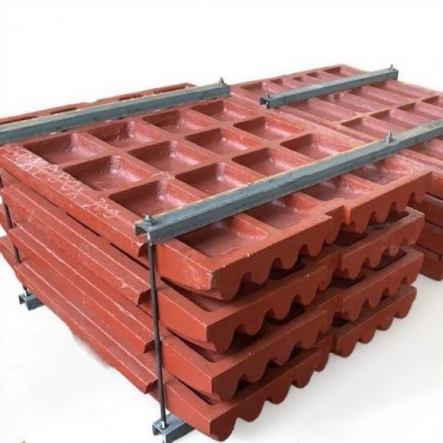
Views: 0 Author: Site Editor Publish Time: 2026-10-07 Origin: Site
In primary crushing operations, asymmetrical wear between stationary and swing plates is an unavoidable mechanical reality that drives up cost-per-ton if mismanaged. Unpredictable or misunderstood wear rates lead to premature part failure, inefficient crushing chambers, decreased throughput, and excessive maintenance downtime. The physical forces inside a crushing chamber are immense, and they do not distribute evenly across the crushing surfaces.
By analyzing the distinct kinematic forces acting on fixed vs movable jaw plates, plant managers can move beyond standard OEM replacements and make data-driven decisions regarding metallurgy, tooth profiles, operating parameters, and maintenance schedules. Optimizing these factors transforms a reactive maintenance approach into a proactive strategy. You can maximize the lifespan of your critical wear components and stabilize your production output.
Kinematics Dictate Wear: The movable plate endures severe gouging abrasion due to its elliptical crushing stroke, while the fixed plate primarily sustains direct compressive stress.
Metallurgical Alignment: High manganese jaw plates are the industry standard, but their effectiveness depends heavily on sufficient impact forces to trigger work-hardening—forces that vary by plate position and feed material.
Profile Customization: Utilizing custom jaw plate castings tailored to specific feed materials and nip angles can balance wear rates and significantly extend the lifespan of jaw crusher wear parts.
Strategic Maintenance & Tracking: Implementing precise flipping schedules based on advanced wear tracking (like ultrasonic gauging) and localized wear zones is critical for maximizing part utilization.
Defining the baseline mechanical functions of the crushing chamber establishes what constitutes normal versus accelerated wear. A primary jaw crusher operates on a relatively simple mechanical principle, yet the forces generated are incredibly complex. To diagnose wear issues accurately on site, you must first understand the distinct roles each plate plays during the crushing cycle.
The fixed jaw crusher plate acts as the stationary anvil of the crushing chamber. It bolts securely to the front frame of the crusher and does not move during operation. Because it remains stationary, it primarily absorbs direct, perpendicular compressive forces as rock is pushed against it by the swing jaw.
Wear on this stationary component concentrates in localized stress zones. These zones depend on the feed trajectory of the incoming material and the open side setting (OSS). As rock enters the chamber, it strikes the upper section of the fixed plate, causing initial impact wear. As the material progresses downward, the forces transition into intense compression. While it endures massive pressure, the lack of dynamic movement means it generally suffers less abrasive friction compared to its counterpart.
In contrast, movable jaw plates act as the dynamic hammer within the chamber. Mounted on the pitman and driven by the eccentric shaft, the swing jaw executes a continuous elliptical motion. This motion is not just a simple back-and-forth compression. It includes a distinct vertical component that changes the wear dynamics entirely.
This elliptical stroke introduces a severe downward rubbing and sliding action against the rock. As the jaw closes to crush the material, it also pushes downward, forcing the rock through the chamber. This creates a complex combination of high-pressure compression and high-friction gouging abrasion. The constant scrubbing action against abrasive rock surfaces is the primary reason the swing jaw experiences a drastically different and often accelerated wear profile.
Understanding how specific mechanical, geological, and operational factors translate into distinct wear profiles helps optimize your crushing circuit. Wear is not a random occurrence. It is the direct result of kinematics, chamber geometry, and material characteristics interacting under extreme pressure.
The eccentric shaft's throw dictates the exact movement of the pitman. As the shaft rotates, it forces the movable jaw inward and downward simultaneously. This downward stroke creates a scrubbing effect that occurs exclusively on the dynamic side of the chamber. The rock drags against the stationary plate while being heavily ground against the moving plate.
This scrubbing effect makes the swing jaw inherently more susceptible to abrasive wear. While the stationary plate experiences simple compression, the moving plate acts like a massive file under thousands of tons of pressure. The severity of this gouging abrasion depends heavily on the stroke length and the operational speed of the eccentric shaft.
The crushing chamber is designed like a V-shaped wedge. The nip angle determines how effectively the jaw grips the incoming rock. Crushing force naturally concentrates at the lower third of the chamber, commonly known as the discharge end or choke point. This is where the material reduces to its final size before exiting.
As the nip angle narrows toward the bottom, material velocity and friction increase exponentially. The rock compacts tightly, leaving very little void space. This intense concentration of pressure and friction leads to the common cupping wear pattern at the bottom of the plates. Cupping occurs when the lower section wears away much faster than the middle or top. It creates a concave depression that severely limits crushing efficiency and alters the discharge gradation.
Your daily operating parameters drastically influence wear distribution. Tightening the Closed Side Setting (CSS) to produce a finer product shifts the primary wear zone lower in the chamber. A tighter CSS increases the crushing ratio. This amplifies the stress and friction at the discharge point, accelerating toe wear on both plates.
Feeding un-screened fines and clay into the chamber causes material packing. When fines accumulate, they create a solid mass that the crusher cannot easily compress or discharge. This leads to mid-chamber bellying wear. The packed material forces the movable jaw to work harder, disproportionately affecting its stroke efficiency and causing rapid, localized wear in the center of the plates rather than at the discharge end.
The geological makeup of your feed material is a massive variable in wear part longevity. Silica content, compressive strength, and feed size distribution all play pivotal roles. High-silica rock acts like sandpaper against the manganese steel, rapidly stripping away metal through pure abrasion.
Highly abrasive, low-impact rock exacerbates the wear disparity between the two plates. If the rock is hard but brittle, it may not provide enough impact force to properly work-harden the manganese surface. In these scenarios, the scrubbing action of the movable jaw strips away the soft outer layer of the alloy before it has a chance to harden. This leads to exceptionally short lifespans for the swing jaw components.
Wear Factor | Impact on Fixed Plate | Impact on Movable Plate |
|---|---|---|
Elliptical Stroke | Minimal. Experiences direct compression. | Severe. Causes downward gouging and scrubbing. |
Tight CSS | Accelerates wear at the very bottom (toe). | Accelerates toe wear and increases friction heat. |
High Fines Content | Causes moderate mid-chamber wear. | Causes severe bellying due to restricted stroke. |
High Silica Rock | Moderate abrasive wear. | Extreme abrasive wear due to sliding action. |
Choosing the right metallurgical composition and physical design requires analyzing observed wear patterns and assessing tramp iron risks. Standard off-the-shelf parts rarely fit specific quarry conditions perfectly. Selecting the appropriate jaw crusher wear parts involves balancing impact resistance, abrasion resistance, and geometric efficiency.
The science of work-hardening makes high manganese jaw plates the undisputed industry standard for primary crushing. Hadfield manganese steel possesses a unique metallurgical property. When subjected to severe impact, its surface structure transforms from a soft, ductile austenitic state to a hard, wear-resistant martensitic state. The core remains ductile, allowing the plate to absorb massive shock loads without shattering.
Evaluating 14%, 18%, and 22% manganese alloys requires matching the manganese percentage to the specific impact forces present in your chamber. Standard 14% manganese fits general applications with moderate impact. An 18% alloy offers better wear life in harder rock. You reserve 22% manganese for extreme impact applications. If you use 22% manganese in an application lacking sufficient impact force, the metal will never work-harden. This results in rapid wear and wasted investment.
For highly abrasive, low-impact applications where manganese fails to work-harden effectively, alternative solutions are necessary. Alloy steel plates or those featuring Titanium Carbide (TIC) inserts offer exceptional abrasion resistance right out of the box. They require no impact to achieve their maximum hardness.
While the cost-to-lifespan ratio of TIC-inserted plates can be favorable in highly abrasive sand and gravel operations, tramp iron considerations matter. TIC inserts are extremely hard but notoriously brittle. They are highly vulnerable to shattering if uncrushable materials, like excavator teeth or loader bucket lips, enter the chamber. Manganese remains the safer, more reliable choice in concrete recycling or poorly sorted quarry applications where tramp metal is a constant threat.
Matching the tooth profile to the feed size and rock characteristics prevents slabby material from slipping. It reduces unnecessary friction and improves the overall bite. The physical shape of the crushing surface is just as important as the metal it is cast from.
Profile Type | Best Application | Wear Characteristics & Benefits |
|---|---|---|
Standard Corrugated | General quarrying, medium to hard rock | Good balance of grip and throughput. Wears evenly in well-graded feed. |
Flat Profile | Highly abrasive, blocky materials | Maximizes surface area contact to reduce localized gouging. Poor grip on round rock. |
Sharp Tooth | Slabby rock, recycling asphalt/concrete | Excellent bite to prevent material slippage. Teeth wear down faster under heavy impact. |
Heavy-Duty (Thickened) | Extreme hard rock, high-impact zones | Added mass in high-wear zones (like the toe) extends life before flipping is required. |
Balancing the upfront cost of premium parts and maintenance labor against increased uptime and throughput is the core challenge of crushing operations. Strategic interventions require moving away from run-to-failure mentalities and adopting precise, condition-based maintenance protocols.
Investing in custom jaw plate castings offers a high return on investment when dealing with specific, localized wear issues. Engineering thicker profiles at known high-wear zones, such as heavy-toe designs, adds sacrificial mass exactly where the crusher needs it most. This prevents premature disposal of a plate that is otherwise perfectly fine in the upper sections.
Custom profiles can also correct inefficient nip angles and improve material flow. If worn cheek plates cause material to bypass the crushing zone, modifying the outer edges of the jaw plates compensates for this dimensional loss. Tailoring the casting to your exact feed material ensures maximum energy transfer into the rock rather than into the crusher frame.
Moving beyond visual inspections is mandatory for modern plant optimization. Utilizing ultrasonic thickness gauges and 3D laser scanning provides objective, quantifiable data on metal loss. Visual inspections often miss subtle cupping or bellying until it severely impacts production.
Mapping wear profiles digitally allows operators to predict exact replacement dates. By tracking the millimeter-per-week wear rate, you can schedule maintenance shutdowns weeks in advance. This avoids catastrophic plate failure and emergency downtime. This data also validates whether a switch to a higher manganese alloy actually yielded a lower cost-per-ton.
Establish a measurement grid on the face of the new jaw plate before installation.
Take baseline ultrasonic thickness readings at each grid point.
Conduct weekly or bi-weekly readings at the exact same grid points during routine maintenance stops.
Input the data into a tracking spreadsheet to calculate the wear rate curve.
Standard OEM rotation protocols usually suggest flipping plates at an arbitrary interval. Condition-based monitoring provides a much better economic return. Flipping a plate moves the unworn upper section into the high-stress discharge zone, effectively doubling the part's useful life.
You must weigh the trade-off between the labor cost of a maintenance shutdown to flip a plate versus the cost of premature part disposal. If a plate shows 40% wear at the toe but only 10% at the top, scheduling a shift to flip the plate is highly profitable. Waiting until the toe is 80% worn often means the plate is too thin to safely flip without risking a fracture.
Evaluating the risks and benefits of replacing both plates simultaneously versus staggered replacements is a common operational debate. Staggered replacements can help manage cash flow, but they introduce significant mechanical risks.
A worn fixed plate severely impacts the crushing efficiency and stroke geometry of a brand-new movable plate. The worn plate has a concave profile. This alters the nip angle and forces the new plate to absorb irregular stress loads. Replacing plates in pairs, or die-matching, ensures optimal chamber geometry, maintains a consistent CSS, and prevents uneven stress from transferring into the eccentric shaft bearings.
Identifying common points of failure during the installation and operational phases prevents costly mistakes. Upgrading your metallurgy or profile is only effective if the installation is executed flawlessly.
The consequences of voids in the backing compound behind the plates are severe. Epoxy backing acts as a shock absorber. It ensures 100% contact between the irregular cast surface of the jaw plate and the machined surface of the crusher frame. Voids create unsupported areas.
Poor seating leads to localized stress fractures, particularly on the heavily loaded movable plate. When the jaw strikes rock over an unsupported void, the metal flexes and cracks. Mitigation requires strict adherence to torque specifications during installation. You must pour temperature-controlled backing compound to ensure it flows smoothly and eliminates air pockets.
There is a high risk of jaw plates shifting after the first 8 to 10 hours of operation. As the crusher runs under load, the backing compound settles, the metal seats fully into the frame, and the wedge bolts naturally stretch.
Mitigation involves mandating a brief shutdown to re-torque wedge bolts and inspect hardware tension. Failing to perform this re-tightening allows plate slop. Even a few millimeters of movement will cause the plate to hammer against the frame. This destroys the backing compound and potentially damages the pitman.
Falling into the financial trap of paying a premium for 22% manganese when the application lacks the impact force to work-harden it is a common error. More expensive does not automatically mean better wear life.
Mitigation requires conducting a thorough wear audit and impact analysis before upgrading alloys. If your current 14% plates wear out via pure abrasion without showing signs of surface hardening, switching to 22% will likely result in the exact same rapid wear at a higher purchase price.
The danger of reusing fatigued wedge bolts, toggle seats, and cheek plates when installing new jaw plates cannot be overstated. Wedge bolts endure immense tension and vibration. Reusing stretched bolts compromises the clamping force required to hold the new, heavy plates in place.
Always replace wedge bolts and nuts when installing new plates.
Inspect toggle seats for gouging; worn seats alter the stroke geometry.
Check cheek plates for thinning; worn cheek plates allow rock to bypass the jaws and wear out the crusher frame.
Audit your current wear patterns meticulously to identify cupping, mid-chamber bellying, or a lack of work-hardening. Partner with a reputable foundry to design custom castings that add mass to your specific high-wear zones. Establish a rigid condition-monitoring schedule using ultrasonic tracking to pinpoint the exact optimal time for plate flipping. Track cost-per-ton rigorously across different alloy types to validate your wear part investments with hard data. Mandate a strict 10-hour re-torque protocol after every new plate installation to prevent seating failures.
A: The movable plate typically wears faster. Its elliptical stroke creates a severe rubbing and gouging action against the rock as it pushes material downward. The fixed plate mostly experiences direct, perpendicular compression, which generates less abrasive friction.
A: Flipping should occur when the lower third of the plate shows 30-40% wear. This proactive approach ensures the thicker, unworn top section is moved to the high-stress discharge zone before the bottom becomes too thin to safely flip.
A: Tightening the CSS concentrates crushing forces lower in the chamber, accelerating toe wear and increasing friction at the discharge point. A wider CSS distributes the crushing work and wear patterns higher up the plates.
A: High manganese steel relies on a metallurgical property called work-hardening. Heavy impact transforms its surface from soft austenite to hard martensite. Without heavy impact, the metal remains soft and wears away rapidly under abrasive conditions.
A: While possible, it is not recommended. Pairing a new plate with a severely worn plate alters the nip angle, reduces crushing efficiency, and can cause uneven stress distribution that damages the crusher frame and bearings.
A: Cupping is caused by the extreme concentration of crushing forces and abrasive friction at the choke point, or discharge end, of the crushing chamber, where the nip angle is narrowest and material is tightly packed.
A: Custom castings can add mass to specific high-wear zones, like the toe, or alter tooth profiles to match exact feed materials. This reduces material slippage, improves the bite, and significantly extends the overall lifespan of the part.