
Views: 0 Author: Site Editor Publish Time: 2026-01-27 Origin: Site
Efficiency problems often start inside the crushing chamber.The right wear parts for cone crushers decide output, energy use, and uptime.In this article, you will learn how key wear parts maximize efficiency,and why products from Huihe Miningparts help achieve stable, long-term performance.
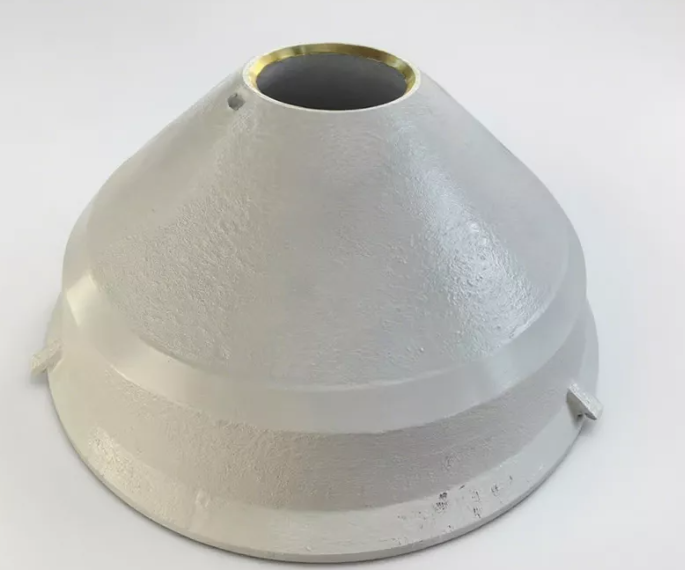
The mantle is the main moving wear component in a cone crusher. It is mounted on the crusher head and gyrates eccentrically, compressing feed material against the bowl liner. Its profile design, material composition, and wear pattern directly affect reduction ratio and power draw. When mantle wear becomes uneven, crushing pressure fluctuates, leading to unstable throughput and inconsistent product size. High-manganese steel mantles, commonly produced in grades such as Mn18Cr2 or Mn22Cr2, are widely used because they combine impact toughness with work-hardening capability. Precision casting and heat treatment, as applied by experienced manufacturers like HH, help ensure mantles maintain stable crushing performance throughout their service life.
The bowl liner, or concave, forms the stationary outer wall of the crushing chamber. Together with the mantle, it defines the chamber geometry that governs material flow and discharge size. As the bowl liner wears, the closed-side setting gradually opens, increasing recirculation and reducing efficiency. Properly engineered concaves maintain chamber volume and help prevent excessive fines. Many operations rely on bowl liners produced to strict dimensional tolerances, ensuring consistent fit and predictable wear behavior. Accurate geometry, rather than aggressive marketing claims, is what allows these components to support long-term efficiency.
Efficiency depends on how the mantle and concave work as a matched pair. Their combined profiles determine where and how crushing occurs inside the chamber. When correctly paired, wear is evenly distributed, power draw remains stable, and liner life is maximized. Poor pairing leads to localized wear zones, early loss of effective crushing area, and reduced efficiency. This is why reputable wear parts suppliers emphasize profile matching and application-specific design rather than generic solutions.
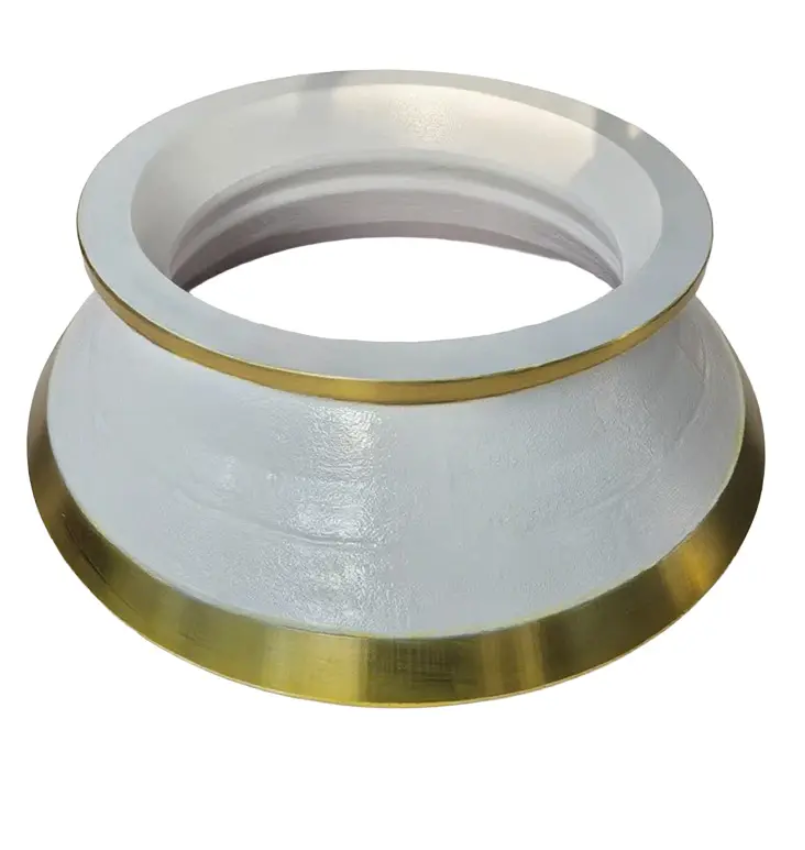
Feed plates and feed cones guide material evenly into the crushing chamber. Uneven feed entry causes asymmetric loading, leading to localized liner wear and unstable throughput. Well-designed feed components help maintain uniform chamber loading, supporting efficient crushing and longer liner life. Many heavy-duty crusher wear parts series include reinforced feed cones designed to handle abrasive feed without distorting material flow.
Arm guards and main frame liners protect structural components from abrasion and impact. While they do not participate directly in crushing, they preserve mechanical alignment and reduce vibration. Structural damage often forces operators to reduce crusher settings, lowering efficiency. High-toughness alloy steel arm guards, commonly supplied by experienced foundries such as Huihe Miningparts, help maintain long-term mechanical stability.
Backing materials secure liners against the crusher body. Poor-quality backing allows liner movement, accelerating wear and reducing efficiency. Proper backing absorbs shock and distributes loads evenly, ensuring liners remain stable throughout their wear cycle. Stable liners maintain consistent chamber geometry, which directly supports efficient crushing.
High-manganese steel remains the industry standard for cone crusher wear parts. Its ability to work-harden under impact allows the liner surface to resist wear while maintaining a tough core. Grades such as Mn13Cr2, Mn18Cr2, and Mn22Cr2 are selected based on rock hardness and abrasiveness. Manufacturers with in-house heat treatment capabilities, like HH, focus on achieving uniform microstructure to ensure predictable work-hardening behavior in real operating conditions.
In highly abrasive applications, standard manganese steel may wear too quickly. Composite liners with ceramic or carbide inserts offer enhanced abrasion resistance while maintaining sufficient toughness. These designs are best suited for controlled impact environments. When applied correctly, they extend liner life and reduce change-out frequency, improving overall crusher efficiency.
Rock hardness, abrasiveness, and feed size all influence material selection. Matching liner material to operating conditions helps maintain stable wear rates and consistent power consumption. This reduces fluctuations in throughput and energy use, which are common signs of inefficient crushing.
Typical Wear Part Materials and Efficiency Impact
Material Type | Key Strength | Typical Application | Efficiency Benefit |
Mn13 | High impact toughness | Soft to medium rock | Stable load absorption |
Mn18 | Balanced properties | Medium-hard rock | Consistent throughput |
Mn22 | High abrasion resistance | Hard, abrasive rock | Longer chamber stability |
Composite liners | Extreme hardness | Controlled abrasion | Reduced downtime |
Impact wear occurs when large or uneven feed particles strike liners with high force during crushing. A controlled level of impact is necessary, as it activates work hardening in manganese steel liners and improves their wear resistance over time. However, excessive impact creates localized plastic deformation and micro-cracking. These changes distort liner profiles and reduce the effective crushing area. As a result, material flow becomes unstable and energy efficiency drops. Monitoring feed size, avoiding oversize material, and maintaining consistent choke feed are proven ways to control impact intensity and protect liner geometry.
Abrasive and sliding wear dominate in applications with high silica content or excessive fines. Fine particles move along liner surfaces instead of fracturing, gradually thinning the material and smoothing the crushing profile. As liner thickness decreases, chamber geometry opens and reduction efficiency declines. This often leads to higher recirculation and increased energy consumption. Selecting suitable manganese grades, using chrome-alloy or composite liners, and controlling fines in the feed can significantly reduce abrasive wear and help maintain stable crushing performance.
Corrosive wear becomes a concern in wet or chemically aggressive environments. Moisture weakens liner surfaces and accelerates both impact and abrasive wear mechanisms. Over time, corrosion reduces material strength and shortens liner service life. Proper drainage, controlled moisture levels, and suitable material selection help slow corrosion. In some cases, protective surface treatments further reduce environmental damage and support consistent crusher efficiency.
Chamber profile selection plays a major role in throughput and energy use. Coarse profiles allow higher feed acceptance and favor volume. Medium profiles balance reduction and capacity, while fine profiles focus on tighter product size control. Choosing the correct profile ensures efficient material flow without overloading the crusher or accelerating wear. A well-matched profile helps maintain stable throughput and consistent power draw.
Different crushing stages require different liner profiles. Secondary stages typically use coarse or medium profiles to handle larger feed sizes efficiently. Tertiary stages use finer profiles to achieve final product specifications. Applying fine profiles too early restricts feed flow, increases wear, and raises energy consumption. Correct profile staging supports smooth material movement and stable efficiency across the entire circuit.
Over-aggressive profiles may deliver short-term production gains but often shorten liner life. Rapid wear leads to frequent liner changes, reduced availability, and higher cost per ton. These hidden losses outweigh initial output increases. Long-term efficiency depends on balanced profile selection that aligns production goals with liner durability and maintenance planning.
Liner Profiles and Efficiency Outcomes
Profile Type | Crushing Stage | Primary Benefit | Efficiency Risk |
Coarse | Secondary | High feed capacity | Lower reduction |
Medium | Secondary/Tertiary | Balanced performance | Moderate wear |
Fine | Tertiary | Tight size control | Higher energy use |
Heavy-duty | Abrasive duty | Longer liner life | Reduced capacity |
Choke feeding keeps the crushing chamber consistently full, which allows material to be crushed against other particles rather than directly against wear surfaces. This inter-particle crushing action reduces concentrated impact on mantles and bowl liners, slowing wear progression. It also improves particle shape and limits the generation of excessive fines. From an energy perspective, a full chamber helps stabilize power draw, avoiding sharp peaks that often signal inefficient crushing. Over time, operations that maintain proper choke feeding typically see more predictable liner wear and steadier overall crusher performance.
Uniform feed distribution ensures that material enters the chamber evenly around its circumference. When feed is biased to one side, liners experience uneven loading, which leads to localized wear and vibration. This imbalance shortens liner life and can affect crusher alignment. Even loading spreads wear more consistently across the chamber, helping mantles and concaves reach their full service potential. It also supports stable throughput, as the crusher can operate closer to its designed capacity without unnecessary stress on specific zones.
The closed-side setting defines the final product size and strongly influences crushing forces. When the setting drifts over time, recirculation increases and energy efficiency drops. Frequent adjustment or neglect can cause unstable reduction ratios and uneven liner wear. Routine monitoring and timely correction help maintain predictable reduction and consistent product quality. Stable settings also reduce unnecessary liner stress, supporting longer wear life and smoother crusher operation.
Tip:Consistent choke feeding is often the most cost-effective way to improve liner life and crusher efficiency without equipment changes.
Regular measurement of liner thickness and profile changes provides early insight into wear trends. By tracking this data, operators can plan replacements before chamber geometry degrades enough to affect efficiency. Predictive replacement avoids running liners to failure, which often leads to sudden downtime and secondary damage. This approach supports steady production and helps maintain consistent energy use throughout the liner lifecycle.
Rotating liners during scheduled maintenance helps balance wear across different zones of the chamber. This practice can recover usable material that would otherwise remain unworn. Planned change-outs, aligned with production schedules, reduce the impact of maintenance on output. Together, rotation and planning improve equipment availability and make liner performance more predictable.
Correct installation is essential for stable liner performance. Poor fit allows movement between the liner and crusher body, leading to fretting, cracking, and accelerated wear. Accurate machining, proper backing support, and careful inspection during installation help ensure liners seat correctly. When fit is controlled, wear progresses more evenly and efficiency remains stable over time.
Wear life and energy consumption are closely linked. Liners that maintain chamber geometry longer allow the crusher to operate efficiently, using less energy per ton processed. As profiles degrade, power draw often increases, signaling rising inefficiency. Evaluating wear parts by their impact on energy use provides a clearer picture of true operating cost.
Each liner change requires downtime, which directly reduces production hours. Fewer change-outs mean higher availability and more consistent output. When wear parts last longer and fail predictably, maintenance can be scheduled rather than reactive, improving overall plant efficiency.
Tracking wear rates, throughput, and energy consumption creates a reliable basis for comparing liner options. Data-driven selection focuses on measurable performance rather than purchase price alone. Over time, this approach helps operations choose wear parts that deliver lower cost per ton and more stable long-term efficiency.
Cost per Ton Evaluation Factors
Factor | Short-Life Liners | Optimized Wear Parts |
Change frequency | High | Low |
Energy per ton | Higher | Lower |
Downtime | Frequent | Reduced |
Overall efficiency | Unstable | Consistent |
Wear parts for cone crushers directly influence efficiency, energy use, and service life. When mantles, bowl liners, and profiles match operating conditions, throughput stays stable and costs drop. Huihe Miningparts provides engineered wear parts that balance durability and performance, helping operators focus on lower cost per ton and predictable long-term efficiency.
A: Wear parts for cone crushers control chamber shape and energy transfer, which directly affects throughput and power consumption.
A: Properly selected wear parts for cone crushers stabilize crushing forces, reduce downtime, and extend liner service life.
A: Mantles, bowl liners, and feed components are key wear parts for cone crushers that shape reduction and material flow.
A: Yes, optimized wear parts for cone crushers lower cost per ton by improving efficiency and reducing change frequency.


