
Views: 0 Author: Site Editor Publish Time: 2025-12-16 Origin: Site
Tumbling mills are widely used in various grinding processes, particularly in the mining, cement, and chemical industries, where they help reduce large materials to finer sizes. These mills rely on the movement of grinding media, such as balls or rods, to achieve efficient grinding. Mill liners play a crucial role in protecting the mill shell from wear and tear, as well as optimizing the grinding process. In tumbling mills, the liners not only protect the mill but also influence the media's movement, improving the overall grinding efficiency. This article aims to explore the key functions of tumbling mill liners, examine the different structural types, and discuss how these liners impact the overall milling performance and efficiency.
Tumbling mills are a category of grinding mills that use the motion of grinding media to reduce the size of materials. In these mills, the media (such as balls or rods) are tumbled within a rotating shell, which generates impact and abrasion forces to break down larger particles into smaller ones. Tumbling mills are widely used in industries like mining, cement, and chemical processing for grinding ores, clinker, and other materials to a fine powder.
Ball Mills: These are the most common type of tumbling mill, where spherical balls are used as the grinding media. They are suitable for fine grinding applications and are commonly used in mineral processing and cement manufacturing.
Rod Mills: Similar to ball mills, but instead of balls, they use long rods as grinding media. These mills are used for coarser grinding and are effective in processing harder materials or non-metallic ores.
SAG Mills (Semi-Autogenous Grinding Mills): These larger mills use a combination of the material being processed and steel balls to help break down the ore. SAG mills are typically used for coarse grinding in mining operations, especially for materials like gold, copper, and iron ore.
Mill liners play a crucial role in tumbling mills by serving two primary purposes:
Protecting the Mill Shell: Liners act as a protective barrier between the grinding media and the mill shell, preventing wear and tear. Without liners, the mill shell would be subjected to significant damage from the abrasive grinding process, leading to higher maintenance costs and potential equipment failure.
Facilitating Efficient Grinding: Liners help control the movement of grinding media, ensuring it lifts and cascades effectively for optimal grinding. The design of the liners directly affects the impact forces and media flow, which in turn influences the efficiency of the grinding process and energy consumption.
The primary function of tumbling mill liners is to protect the mill shell from wear and corrosion caused by the grinding media and raw materials. The grinding action within the mill subjects the shell to constant abrasion, which can lead to significant damage over time. Liners act as a protective barrier, preventing direct contact between the shell and the grinding media, thereby extending the lifespan of the mill shell and reducing maintenance costs.
Tumbling mill liners play a vital role in optimizing the grinding action within the mill. They help control the movement of grinding media, such as balls or rods, ensuring effective media lift and cascading. Properly designed liners enhance the grinding efficiency by improving the grinding media’s contact with the material, allowing for more efficient breakage and reducing the overall grinding time. The liner profile influences how well the media moves within the mill, which directly impacts grinding performance.
The wear resistance of liners is crucial for maintaining mill performance over time. The right liner material, such as white iron or rubber, must be selected based on the specific grinding conditions and the hardness of the materials being processed. White iron liners are highly resistant to abrasion and are ideal for handling abrasive materials like clinker, while rubber liners are more suitable for wet milling applications or less abrasive materials. Choosing the right material ensures longer liner life, reduced maintenance, and improved overall mill performance.
Tumbling mill liners can influence energy consumption by optimizing the grinding process. Well-maintained liners that improve media movement and grinding action can lead to more efficient grinding, requiring less energy to achieve the desired particle size reduction. By reducing the friction and power losses in the grinding process, liners help lower the mill’s overall power consumption, making the milling operation more energy-efficient. In turn, this contributes to cost savings and sustainability in industrial operations.
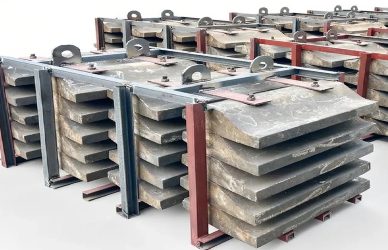
Wave liners feature a wavy profile that helps lift and cascade the grinding media. This enhances the grinding action by increasing impact and attrition, making them ideal for high-impact applications with abrasive materials like ores. The increased media movement improves grinding efficiency and overall performance.
Ribbed liners have ridges that improve the flow and alignment of the grinding media. They promote more uniform media movement, reducing liner wear and enhancing grinding efficiency. Ribbed liners are particularly useful for reducing abrasion on both the liner and media, leading to longer liner life.
Smooth liners are used for mills processing softer materials or in wet milling. Their flat design minimizes friction, allowing the grinding media to move with less resistance. These liners are ideal for materials that require less aggressive grinding, such as in cement mills or wet mineral processing.
Custom-designed liners are tailored to meet specific mill and material needs. Combining features from wave, ribbed, and smooth liners, custom liners optimize grinding efficiency and reduce wear. They are particularly useful when processing materials with unique properties or when specific mill conditions must be met.
White iron liners are commonly used in tumbling mills for high-wear applications where grinding media and raw materials cause significant abrasion. These liners are particularly effective in protecting the mill shell from the severe forces generated during grinding, ensuring both durability and high performance in demanding milling environments. White iron is chosen for its ability to withstand abrasive wear and its resilience under harsh grinding conditions, making it ideal for industries like mining, cement production, and mineral processing.
High-chromium white iron is particularly well-suited for tumbling mill liners due to its exceptional abrasion resistance and toughness. The high chromium content (usually 12% to 30%) gives the iron superior resistance to wear caused by the grinding media, even in mills processing abrasive materials like clinker, ore, or hard minerals. This material also provides enhanced impact resistance, making it more durable than other liners, such as steel or rubber, in high-impact grinding applications.
White iron liners are ideal for applications where abrasion resistance is critical, and the materials being processed are highly abrasive or difficult to grind. They are particularly beneficial in:
Mining: Grinding hard ores where toughness and abrasion resistance are required.
Cement Production: Protecting the mill shell while grinding clinker and other hard materials.
Quarrying and Mineral Processing: Handling abrasive minerals with a high wear rate.
White iron liners should be chosen when the grinding process involves heavy impacts and abrasive materials, as they provide the best balance of strength and wear resistance to ensure long-term performance and reduce the need for frequent liner replacements.
Tumbling mill liners influence grinding efficiency by affecting the media movement. Wave liners lift the media higher, creating more impact and attrition, ideal for harder materials. Ribbed liners improve media flow and reduce wear, optimizing performance for medium-impact applications. The right liner profile enhances media contact, improving milling efficiency.
Yes, custom-designed liners can be tailored to raw materials and grinding conditions. By considering factors like material hardness and operating conditions, customized liners (e.g., high-chromium white iron for abrasiveness or rubber liners for wet milling) optimize media movement and grinding efficiency, extending liner life.
The lifespan of tumbling mill liners varies depending on factors like material hardness and abrasiveness. In general, liners for abrasive materials may last 6 to 12 months, while those for softer materials last longer. Regular inspections help determine the best time for replacement to ensure optimal performance.
Tumbling mill liners enhance energy efficiency by reducing friction and improving media movement. Well-maintained liners lower energy consumption by ensuring optimal grinding conditions, making the mill more efficient and reducing power costs.
To summarize, tumbling mill liners are crucial components that ensure efficient mill performance by protecting the mill shell and optimizing grinding conditions. Choosing the appropriate liner material and design tailored to the specific grinding environment can significantly improve grinding efficiency and reduce wear. It's essential to select the right liners based on the material hardness and grinding needs to maximize mill operation. For high-wear applications, white iron liners stand out for their durability and abrasion resistance, providing reliable performance and extended lifespan in demanding grinding conditions.


