Views: 0 Author: Site Editor Publish Time: 2026-06-03 Origin: Site
Modern mineral processing operations face extreme margin pressures every single day. Comminution processes—specifically crushing and grinding—often account for the highest energy and consumable costs within any plant. Standard or poorly specified wear components degrade rapidly under continuous abrasive and corrosive conditions. This rapid degradation leads to severe shape loss. It causes highly inefficient grinding cycles. It also forces frequent, frustrating mill stoppages.
Transitioning your procurement strategy makes a massive difference. By specifying high-quality wear-resistant grinding parts, you shift away from a recurrent operational burden. Instead, you make a strategic investment in long-term plant availability. You maximize your daily throughput. In this article, we break down the hidden costs of subpar media. We explore the core operational benefits of premium upgrades. We also analyze the critical trade-offs between hardness and toughness. Finally, you will learn how to select the optimal form factor for your specific comminution circuit.
Upgrading to high-spec wear parts directly reduces unplanned downtime and extends continuous operational campaigns.
Consistent media shape retention improves milling efficiency and energy consumption per ton of ore.
Proper evaluation requires analyzing the critical balance between hardness (abrasion resistance) and toughness (impact resistance).
Many plant managers underestimate the cascading effects of poor grinding media. Sub-optimal components do not simply wear out faster. They actively degrade the performance of the entire comminution circuit. You must recognize these hidden penalties early.
Grinding circuits demand massive amounts of electricity. When standard media wears unevenly, it loses its ideal geometric shape. Spheres turn into irregular polygons. These deformed shapes fail to roll smoothly inside the mill. Consequently, the mill power draw increases significantly. The motors must work harder to tumble dead weight. Furthermore, your target grind size (P80) becomes highly inconsistent. Coarse material bypasses the grinding zone. This inefficiency forces the circuit to consume more energy just to achieve baseline liberation targets.
Low-tier wear components often suffer from severe structural defects. They cannot handle continuous dynamic loads. This leads to several immediate mechanical failures:
Spalling: Surface layers flake off, leaving rough, jagged edges behind.
Splitting: Components break cleanly in half due to internal casting voids or poor heat treatment.
Premature Wear: Accelerated mass loss forces unscheduled mill shutdowns for emergency clean-outs.
Every unscheduled shutdown costs thousands of dollars per hour in lost production. Maintenance crews must halt operations, lock out the equipment, and manually remove broken charge. Moreover, sharp, broken media gouges internal mill liners. This accelerates liner degradation and forces early, expensive relining campaigns.
Poor grinding performance ripples through the entire plant. If the comminution circuit discharges coarse, poorly liberated particles, downstream processes suffer. Flotation circuits require specific particle size distributions to attach minerals to bubbles. Leaching circuits need exposed mineral surfaces for chemical reactions. Inconsistent grinding directly lowers your ultimate recovery rates. You end up sending valuable minerals straight to the tailings dam.
Upgrading your comminution media transforms plant performance. Premium components provide precise mechanical advantages. They stabilize your entire processing pipeline.
High-alloy materials and specialized metallic parts dramatically increase component lifespans. They resist severe abrasive forces. They withstand corrosive slurry environments. Because they last longer, you drastically increase the interval between required change-outs. You can comfortably align media replacement schedules with broader scheduled plant maintenance. This synchronization eliminates standalone outages. It keeps your plant running continuously for longer campaigns.
Kinematics refers to how media moves and interacts inside the mill barrel. Premium parts maintain their geometric integrity much longer. They stay round. They keep their sharp edges when necessary. This shape retention ensures maximum contact surface area during operation. Perfect spheres create precise point-to-point contacts. These contacts fracture ore particles with optimal energy transfer. You achieve highly efficient particle breakage. You maintain a stable, predictable product size distribution.
Higher wear resistance translates directly to lower addition rates. In standard operations, operators must frequently add fresh media. This is called the make-up charge. It replaces the mass lost to abrasion. Upgraded parts lose mass at a fraction of the rate of standard parts. Therefore, your daily make-up charge drops significantly. You require less inventory on site. You maintain the optimal mill load with far less effort.
Safety remains the top priority in any mineral processing facility. Mill entry represents a high-risk activity. Confined spaces, heavy lifting, and slippery surfaces pose constant hazards to maintenance crews. Sub-optimal media requires frequent manual interventions. Broken pieces must be torched or pry-barred out of the trunnion. High-quality media fractures rarely. It wears down smoothly. Fewer part replacements mean fewer manual interventions. You drastically reduce the safety risks associated with mill entry.
Best Practice: Monitor your daily make-up charge weights closely. A sudden spike indicates premature media failure.
Best Practice: Conduct regular particle size distribution (PSD) checks at the cyclone overflow. It helps verify media shape retention.
Common Mistake: Mixing premium media with low-tier media. The harder components will quickly destroy the softer ones.
Common Mistake: Ignoring abnormal mill noise. Clattering usually indicates broken charge or bare liners.
Selecting the right alloy is not a simple guessing game. It requires strict metallurgical analysis. You must carefully balance two competing properties.
No single material is indestructible. You cannot find a component possessing maximum hardness and maximum toughness simultaneously. Evaluating wear parts requires a deep understanding of your specific mill environment. You must analyze the feed size, the mill diameter, and the rotational speed. These variables dictate the dominant wear mechanisms at play.
Hardness measures a material's ability to resist surface deformation and scratching. It is absolutely crucial for fine grinding environments. In ball mills or secondary grinding circuits, sliding abrasion represents the primary wear mechanism. Media pieces rub against each other and against the ore. High hardness prevents the material from wearing away during this constant friction. Metallurgists often specify martensitic microstructures with high primary carbide volumes to maximize abrasion resistance.
Toughness measures a material's ability to absorb energy and deform without fracturing. It is essential for high-impact environments. Semi-Autogenous Grinding (SAG) mills feature large diameters. Media drops from significant heights, smashing into large ore boulders and steel liners. If the media lacks toughness, these catastrophic impacts cause immediate breakage, spalling, or chipping. You must sacrifice some surface hardness to ensure the core remains ductile enough to survive the fall.
You must match the media composition to your specific ore body. Metallurgists evaluate ore abrasiveness using the Bond Abrasion Index (Ai). They also test for corrosivity, especially in sulfide ores. High-chrome cast irons excel in highly abrasive, low-impact environments. Forged alloy steels dominate in high-impact, heavy-duty applications.
Wear Environment | Primary Wear Mechanism | Critical Property Required | Ideal Material Structure | Risk of Wrong Selection |
|---|---|---|---|---|
SAG Mills (Primary Grinding) | Heavy Impact & Dropping | Toughness | Forged Alloy Steel, Tempered Martensite | Catastrophic splitting; liner damage. |
Ball Mills (Secondary Grinding) | Sliding Abrasion & Friction | Hardness | High-Chrome Cast Iron, High Carbides | Rapid shape loss; high addition rates. |
Regrind Mills (Fine Grinding) | Micro-Abrasion & Corrosive Wear | Extreme Hardness & Corrosion Resistance | Specialized High-Chrome, Ceramic Options | High media consumption; poor liberation. |
Material composition represents only half the equation. You must also deploy the correct physical shape. Different comminution stages require different mechanical actions to break ore efficiently.
Grinding Balls stand as the absolute industry standard. They deploy heavily across SAG mills and ball mills. Their spherical shape allows them to roll freely, creating a cascading tumbling action. When evaluating spherical media, you must focus on volumetric hardness. Volumetric hardness ensures the ball remains hard from its outer surface all the way to its core. If the core is soft, the ball will wear normally at first, then rapidly degrade into an oblong shape. Industry professionals call this "potatoing." Potatoed media locks together, stops rolling, and ruins grinding efficiency.
Primary grinding circuits often deploy Grinding Rods. Operators use rod mills to prepare feed for downstream ball mills. Rods act as a mobile screen inside the barrel. They hold larger particles apart while crushing them, which prevents over-grinding and excessive slimes generation. High wear-resistant rods face massive dynamic loads. They must maintain strict straightness throughout their lifecycle. If a rod lacks sufficient toughness or wear resistance, it thins out unevenly. Uneven rods bend under the weight of the charge. Bent rods tangle together, creating a "bird's nest." A tangled rod charge forces a total mill shutdown and presents severe extraction hazards.
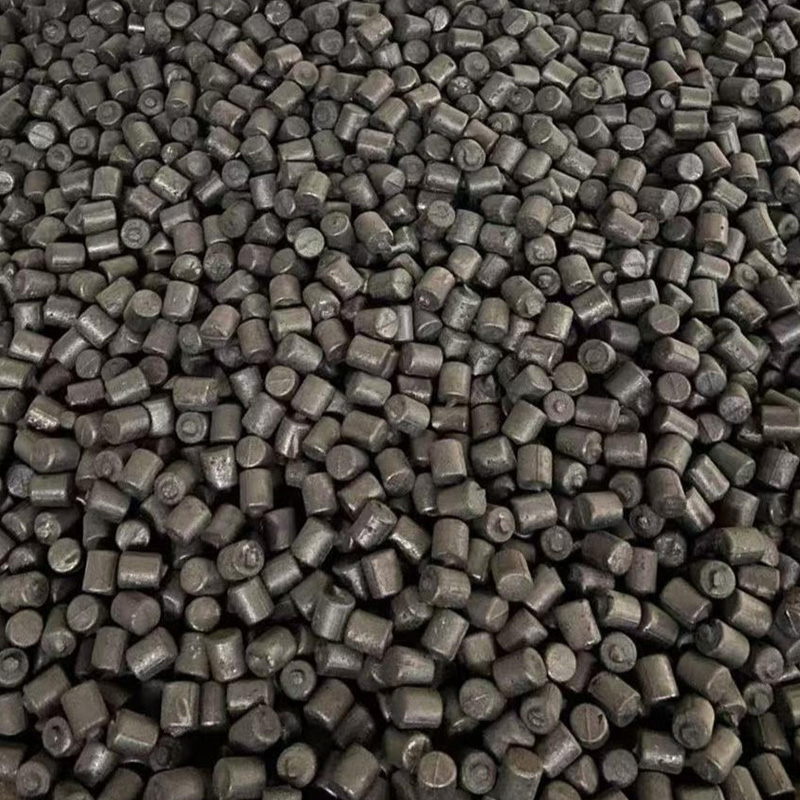
Specialized fine grinding circuits frequently utilize Grinding Cylpebs. These components feature a slightly tapered cylindrical shape. They do not roll identically to spheres. Instead, their geometry provides a significantly higher surface-area-to-mass ratio. This increased surface area makes them exceptionally effective for secondary or tertiary grinding. Cylpebs rely on line-to-line and surface-to-surface contact to break down ultra-fine particles. High wear resistance is absolutely critical here. It ensures the sharp cylindrical edges remain intact. Preserving these edges guarantees the necessary attrition required for optimal fine particle liberation.
High wear-resistant parts act as a powerful mechanical lever within your plant. They do more than just survive harsh conditions. They actively maximize plant throughput, stabilize energy draw, and create highly predictable operational cycles. By prioritizing robust microstructures and optimal form factors, you protect downstream recovery rates and secure long-term plant availability.
Your next step requires immediate action. Advise your engineering teams to initiate a comprehensive wear audit of the current comminution circuit. Review your latest Bond Abrasion Index data to understand your ore's true competence. Finally, request empirical trial data from prospective tier-one suppliers. You must validate metallurgical claims before standardizing any new wear part contract.
A: Look for several distinct operational indicators. A sudden or sustained increase in make-up charge rates suggests rapid mass loss. Frequent mill power spikes indicate the media has lost its shape and is tumbling poorly. You should also watch for excessive broken media in the discharge trunnion. Finally, declining throughput required to maintain your target P80 signals severe media degradation.
A: It can, if mismatched. The hardness of the grinding media and the mill liners must be engineered as a paired system. You want the media to wear sacrificially without compromising the liner's lifespan. If you introduce ultra-hard media into a mill with soft steel liners, the media will gouge and destroy the internal profiling prematurely.
A: Depending on the mill size, ore abrasiveness, and continuous operation schedules, a statistically significant trial takes time. It usually requires 3 to 6 months of continuous operation. This duration allows engineers to accurately measure wear rates, track volumetric shape retention, and capture enough data to confidently validate the supplier's performance claims.