Views: 0 Author: Site Editor Publish Time: 2026-06-18 Origin: Site
Grinding media represents one of the largest consumable expenses in cement clinker production. It directly impacts both operational expenditure and final product quality. Specifically, Blaine fineness depends heavily on consistent media performance. Cement plants are shifting their focus from initial procurement prices to overall operational costs per ton. In this environment, the material science behind grinding media becomes a critical evaluation criterion. Using the wrong media rapidly drains budgets through excessive wear. This guide breaks down the metallurgical realities and operational economics driving modern cement plants. You will learn why facilities standardize on high chrome alloys for finish milling. We also outline implementation considerations to optimize your plant operations. Evaluating supplier capabilities correctly ensures maximum efficiency.
Extended Wear Life: High-chromium microstructures offer superior abrasion resistance, significantly lowering the grams-per-ton (g/t) wear rate in dry milling environments.
Maintained Milling Efficiency: Slower wear rates allow the media to retain its spherical shape longer, ensuring consistent particle size distribution and stable mill throughput.
TCO Over Initial Price: While commanding a higher upfront cost than forged alternatives, the reduction in mill downtime and media top-ups yields a lower net cost per ton of cement milled.
Supplier Qualification Matters: Achieving optimal breakage rates (<1%) requires strict supplier evaluation of heat treatment processes and custom alloy configurations.
Cement ball mills consume massive amounts of energy. A significant portion of this energy dissipates as heat rather than grinding work. Finish mills handle highly abrasive clinker. Wear costs escalate quickly in these severe environments. Plant managers face immense pressure to control operational expenditures. Inferior grinding media accelerates material degradation. This degradation fundamentally damages production margins. Operators must view grinding media as an active efficiency driver.
Deformation carries a severe financial penalty. Lower-grade balls lose their spherical shape rapidly. Uneven wear flattens the media surfaces. Flattened balls decrease the effective grinding contact area. The mill must run longer to achieve the target Blaine fineness. Extended milling times drain profitability immediately. Power draw spikes as the mill compensates for inefficient impact and attrition. Sphericity retention is non-negotiable for stable throughput.
Downtime hides massive operational losses. Frequent mill stops ruin production schedules. Operators must halt operations to sort deformed media. Removing spalled debris requires intense manual labor. Volume top-ups stop continuous manufacturing completely. Every stopped hour represents lost yield. Restarting a mill also demands peak energy spikes. These hidden costs dwarf the initial purchase price of standard media.
Microstructure dictates performance far more than pure hardness. Foundries manipulate chemistry to form complex chromium carbides. These carbides, known as M7C3, embed within a martensitic matrix. This specific microstructure provides extreme abrasion resistance. The martensitic matrix prevents excessive brittleness. Relying solely on pure hardness often leads to shattering. The chemical balance ensures the media survives continuous impact. Metallurgical precision separates premium media from commodity products.
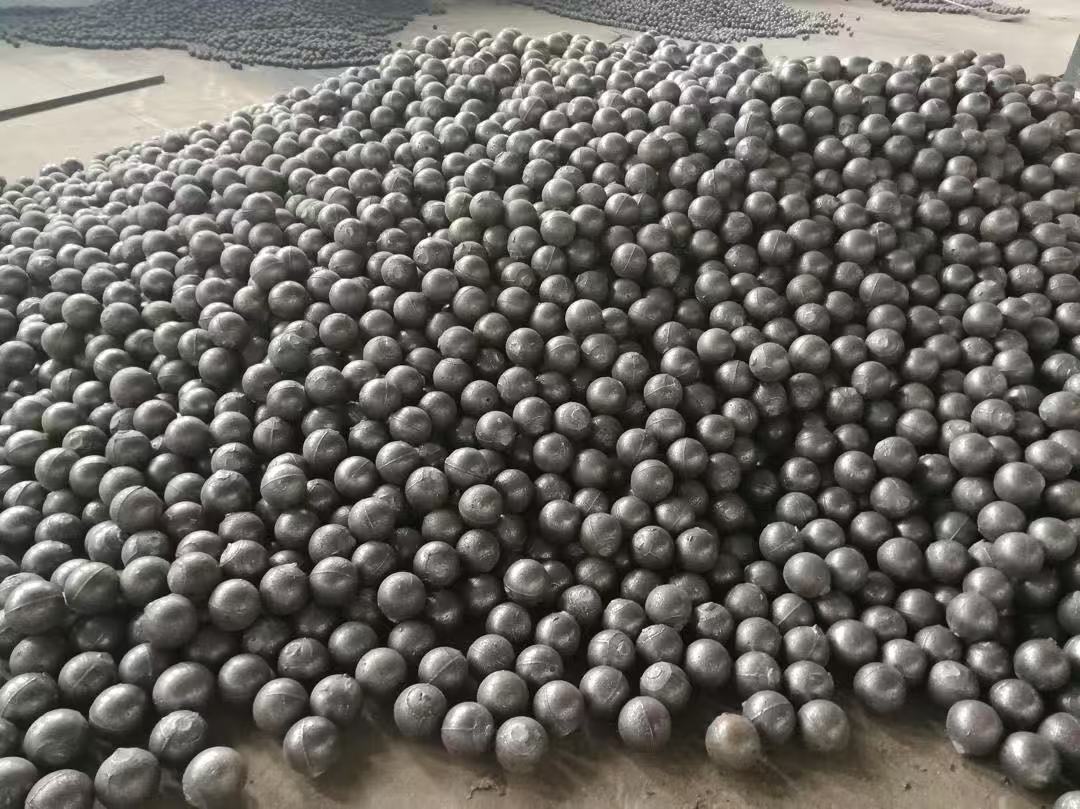
Volumetric hardness remains a critical quality indicator. High-chromium Alloyed Grinding Balls deliver uniform hardness throughout. The surface and the core maintain consistent ratings. You typically see values between 58 and 66 HRC. Standard forged balls suffer a sharp drop-off. Their outer shells may test high, but their cores remain soft. As forged media wears, degradation accelerates rapidly. Consistent core hardness guarantees linear wear rates.
Understanding alloy grading helps clarify performance expectations. We categorize chrome content to match specific abrasion levels. The matrix below outlines standard classifications.
Alloy Category | Chromium Content | Primary Characteristics | Cement Mill Suitability |
|---|---|---|---|
Low Chrome | 1% - 3% | Basic impact resistance, low cost. | Poor. High wear rates in dry milling. |
Medium Chrome | 4% - 8% | Moderate abrasion resistance. | Marginal. Used in less abrasive environments. |
High Chrome | 10% - 27% | Extreme abrasion resistance, M7C3 carbides. | Optimal. Required for abrasive clinker grinding. |
Dry milling requires specific metallurgical properties. Wet mining environments tolerate different media chemistries. Cement finish mills operate completely dry. They generate intense internal temperatures during the grinding process. High temperatures exacerbate abrasive wear on steel. High chrome metallurgy resists these severe thermal and abrasive conditions. Standard carbon steel simply degrades under this friction.
Mapping ball size to the mill compartment maximizes efficiency. You must balance impact forces with abrasion resistance. The two primary compartments require different media strategies.
First Compartment (Coarse Grinding): This section handles large clinker nodules. It requires heavy impact resistance. Foundries balance chrome content with toughness here. This prevents breakage when large balls drop from lifter bars.
Second and Third Compartments (Fine Grinding): These sections demand maximum abrasion resistance. Smaller media dominate these chambers. They maximize surface area for fine attrition. High chrome chemistry excels in this high-friction zone.
Breakage rates determine operational stability. The cement industry expects a breakage rate of ≤1%. Anything higher threatens internal mill components. Broken fragments lodge into mill grates. They block powder flow and choke the mill. Maintaining continuous throughput requires high chrome grinding balls engineered for high-stress environments. Low breakage rates protect your downstream classification equipment.
Capital expenditure often deters initial upgrades. High chrome media commands a significantly higher purchase price. Procurement teams frequently resist this upfront cost. However, evaluating true economic value requires a broader perspective. Operational savings offset the initial premium rapidly. Cheaper media results in expensive operational failures.
Plant managers utilize a specific evaluation framework to measure true value. You calculate this using a straightforward formula.
The Cost Formula: (Initial Cost + Maintenance/Downtime Cost + Energy Waste) / Tons Milled
This formula reveals the true cost per ton of cement. Factoring in downtime exposes the hidden penalties of cheap media. Energy waste from deformed balls drastically inflates the numerator. Accurate tracking always justifies premium alloys in severe wear applications.
Predictable consumption transforms maintenance planning. Stable wear rates allow exact forecasting. You measure this in grams per ton (g/t). Plant managers schedule maintenance with absolute confidence. Unplanned procurement requests disappear. Consumable budgets experience fewer surprises. Predictability directly improves the bottom line.
Mill liner compatibility requires careful consideration. Mismatched hardness causes severe mechanical issues. Placing 65 HRC balls on softer liners destroys the liner. Accelerated liner wear forces premature mill shutdowns. Liner replacement halts the entire plant for days. You must evaluate the entire tribological system. Suppliers should analyze your existing liners before recommending media.
Heat treatment variances destroy media integrity. Commoditized suppliers often rush the quenching and tempering phases. Improper heat treatment leaves severe internal stresses. Retained austenite causes catastrophic splitting during operation. Balls shatter violently inside the mill. This creates dangerous steel-on-steel impact scenarios. You must evaluate supplier heat treatment protocols rigorously.
Specifying a custom mining grinding ball mitigates these risks. Every cement plant processes unique clinker. Clinker abrasiveness varies by quarry and kiln operation. Suppliers must adjust carbon-chromium ratios accordingly. They must match your specific mill dimensions and rotational speeds. Evaluating a supplier's customization capability serves as a mandatory shortlisting step. Avoid vendors who push one-size-fits-all solutions.
Transitioning to high chrome media represents a strategic operational decision rather than a simple procurement swap.
Prioritize volumetric hardness and microstructure over basic surface hardness ratings.
Ensure your chosen media matches the specific impact and abrasion requirements of each mill compartment.
Always verify that the grinding media hardness aligns safely with your existing mill liner specifications.
Technical buyers should take immediate action to optimize milling efficiency. Request a localized wear analysis from shortlisted metallurgical suppliers. Demand physical sample testing against your specific clinker composition. Commission a full mill audit before committing to a complete media charge. These steps guarantee optimal performance and predictable operational costs.
A: The hardness typically ranges from 58 to 66 HRC. This rating depends heavily on the specific chromium percentage, which usually falls between 10% and 27%. The exact hardness target also varies based on the mill compartment application and required impact resistance.
A: In dry cement milling, high chrome balls exhibit a substantially lower wear rate (g/t). They generally last 2 to 3 times longer than standard forged steel balls. The exact ratio depends on specific clinker abrasiveness and operating temperatures.
A: Yes, they can operate in the first compartment. However, the alloy chemistry and heat treatment must be specifically tailored for higher impact resistance. This prevents breakage when the heavy media drops from the lifter bars onto the material bed.
A: Primary causes include inconsistent heat treatment resulting in retained austenite. Internal casting defects like shrinkage cavities also cause failures. Additionally, operating the mill empty causes severe steel-on-steel impact, leading to rapid spalling and breakage.